
Filing taxes for the first time can feel intimidating, especially if you’ve recently started working or earning income. Between tax forms, deductions, filing deadlines, and credits, it’s easy to wonder where to begin.
The good news is that filing your first tax return is usually much simpler than it seems. Once you understand the process and gather the necessary documents, you can complete your return with confidence while avoiding common mistakes.
Whether you’re filing as a full-time employee, freelancer, college student, or self-employed worker, this guide explains everything you need to know. You’ll learn how to prepare your tax return, what documents to collect, which tax credits and deductions may apply, and how to file the first time correctly.
If you’re filing a federal tax return in the United States, the Internal Revenue Service (IRS) is the official source for tax forms, filing requirements, deadlines, and refund information. Always verify the latest tax rules before submitting your return.
Quick Answer
How to file taxes for the first time: Filing taxes means reporting your annual income, deductions, tax credits, and taxes already paid to the IRS. After reviewing your tax return, the IRS determines whether you owe additional taxes or qualify for a refund. Filing accurately and before the deadline helps you avoid penalties and claim every tax benefit you’re eligible for.

Key Takeaways
| Key Point | Summary |
| Gather Documents First | Collect income statements, tax forms, and supporting records before filing. |
| Choose the Correct Filing Status | Your filing status affects tax rates, deductions, and refund eligibility. |
| Don’t Miss Tax Credits | Tax credits can significantly reduce the amount of tax you owe. |
| Electronic Filing Is Faster | E-filing is the quickest and most accurate way to submit a tax return. |
| File Before the Deadline | Filing on time helps you avoid penalties and unnecessary interest charges. |
What Does Filing Taxes Mean?
Filing taxes is the process of reporting your annual income, deductions, tax credits, and taxes you’ve already paid to the Internal Revenue Service (IRS). After reviewing your tax return, the IRS determines whether:
- You owe additional taxes.
- You’re entitled to a tax refund.
- Your tax obligations have already been satisfied.
Think of your tax return as a yearly financial summary that ensures you’ve paid the correct amount of federal income tax.
For most taxpayers, filing an accurate return not only helps avoid penalties but also ensures they receive any refunds or credits they’re entitled to.
💡 Expert Tip: Create a dedicated digital folder for tax documents throughout the year. Keeping everything in one place makes tax season faster, easier, and less stressful.
Real-World Example
Emily lands her first full-time job and earns $40,000 during the year.
Each paycheck includes federal income tax withholding. When tax season arrives, Emily files her federal tax return to compare the taxes already paid with the amount she actually owes.
Depending on the calculation, one of three things can happen:
- She received a refund because too much tax was withheld.
- She owes additional tax because not enough was withheld.
- Her withholding was accurate, so she neither owes money nor receives a refund.
This example shows why filing a tax return is important—even if taxes have already been deducted from your paycheck.
Who Needs to File a Tax Return?
Not everyone is required to file a federal tax return, but many people benefit from filing even if it’s not mandatory.
Generally, you may need to file if you:
- Earn wages from an employer.
- Receive freelance or self-employment income.
- Earn investment income, dividends, or interest.
- Have taxes withheld from your paycheck.
- Qualify for refundable tax credits.
- Receive other taxable income.
Even if your income falls below the filing threshold, filing a return may allow you to claim a tax refund or receive valuable tax credits.
Students, part-time workers, and first-time employees often overlook this opportunity and miss refunds they could have received.
📌 Helpful Resource: Before filing, check the latest IRS filing requirements to confirm whether you’re required to submit a federal tax return based on your income and filing status.
Documents You Need Before Filing
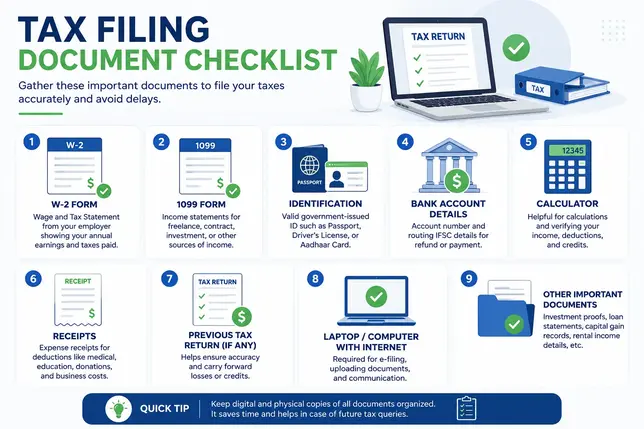
One of the easiest ways to avoid delays is to gather every required document before you begin preparing your return.
Having everything organized saves time and reduces the chance of mistakes.
Income Documents
| Income Source | Common Documents |
| Employment | Form W-2 |
| Freelance Work | Form 1099-NEC or 1099-MISC |
| Investments | Form 1099-INT or 1099-DIV |
| Rental Property | Income and expense records |
If you earned money from multiple sources, make sure each one is included when preparing your return.
Personal Information
You’ll typically need:
- Government-issued photo ID
- Social Security Number (SSN) or Taxpayer Identification Number (TIN)
- Bank account information for direct deposit
- Previous year’s tax return (if available)
Keeping this information ready can make the filing process much smoother.
Deduction and Credit Records
Tax deductions and tax credits can reduce your overall tax bill, so collect documents related to:
- Education expenses
- Student loan interest
- Charitable donations
- Retirement contributions
- Mortgage interest
- Childcare expenses
- Medical expenses (if applicable)
Keeping receipts and supporting records throughout the year makes claiming deductions much easier.
⚠️ Common Mistake: Many first-time filers forget to keep proof of deductible expenses. Missing documentation can prevent you from claiming valuable tax benefits.
Understanding Tax Filing Status
Your filing status is one of the most important parts of your tax return because it affects:
- Your tax rate
- Standard deduction
- Eligibility for tax credits
- Potential refund amount
The IRS recognizes several filing statuses.
| Filing Status | Typical Situation |
| Single | Unmarried taxpayer |
| Married Filing Jointly | Married couple filing one return |
| Married Filing Separately | Married couple filing separate returns |
| Head of Household | Eligible unmarried taxpayer supporting a dependent |
| Qualifying Surviving Spouse | Certain taxpayers with a dependent child |
Choosing the wrong filing status can delay your return or reduce your refund.
If you’re unsure which status applies to you, review the IRS filing status guidance before submitting your return.
Expert Tip: If you’re filing taxes for the first time, reputable tax software can help determine the correct filing status and identify common mistakes before you file.
Step-by-Step Guide to Filing Taxes
Once you’ve gathered your documents and understand your filing status, you’re ready to prepare your tax return. Following these steps can help you avoid common mistakes and complete the process with confidence.
Step 1: Gather All Tax Documents
Before you start, make sure you have every document you’ll need. Missing paperwork can delay your filing or lead to inaccurate information.
Your checklist should include:
- Income statements (such as W-2, 1099, or local equivalents)
- Records for deductions and expenses
- Documents supporting tax credits
- Bank account details for direct deposit
- Previous year’s tax return (if available)
Pro Tip: Create a digital folder to store all tax-related documents throughout the year. Staying organized makes tax season much less stressful.
Step 2: Determine Your Filing Status
Choose the filing status that best matches your current situation. Your filing status affects:
- Tax rates
- Standard deductions
- Eligibility for certain tax credits
- Potential refund amount
Selecting the correct filing status helps ensure your return is accurate and prevents unnecessary delays.
Step 3: Calculate Your Total Income
Add together every source of taxable income you received during the year.
This may include:
- Employment income
- Freelance or self-employment earnings
- Investment income
- Rental income
- Interest and dividend payments
Be sure to report all eligible income sources. Omitting income can result in penalties or processing delays.
Step 4: Claim Eligible Deductions
Tax deductions reduce your taxable income, which may lower the amount of tax you owe.
Example
| Item | Amount |
| Gross Income | $50,000 |
| Tax Deduction | $5,000 |
| Taxable Income | $45,000 |
In this example, your taxable income decreases from $50,000 to $45,000, potentially reducing your overall tax liability.
Step 5: Apply Tax Credits
Unlike deductions, tax credits reduce your tax bill directly.
Depending on your eligibility, you may qualify for credits such as:
- Education credits
- Child tax credits
- Energy-efficiency incentives
- Low-income tax credits
Always review the credits available in your country, as they can significantly reduce the amount you owe or increase your refund.
Expert Insight: Many first-time taxpayers focus only on deductions, but tax credits often provide greater financial benefits because they reduce your tax bill dollar for dollar.
Step 6: Calculate Your Tax Liability or Refund
After calculating your income, deductions, and credits, compare your total tax liability with the taxes already paid throughout the year.
The outcome will generally be one of the following:
- You owe additional taxes.
- You’re entitled to a tax refund.
- Your tax balance is zero.
Many online tax filing platforms perform these calculations automatically, reducing the likelihood of mathematical errors.
Step 7: Submit Your Tax Return
Most taxpayers can choose from several filing methods.
| Filing Method | Advantages |
| Electronic Filing (e-File) | Fast processing and fewer errors |
| Tax Software | Step-by-step guidance for beginners |
| Tax Professional | Expert advice for complex situations |
| Paper Filing | Suitable if electronic filing isn’t available |
Electronic filing is generally the quickest and most convenient option. Many tax authorities also process electronic returns faster than paper submissions.
If you’re filing in the United States, the IRS Free File program may be available to eligible taxpayers.
Step 8: Keep Copies of Your Records
Once your return has been submitted, keep copies of:
- Your completed tax return
- Income statements
- Receipts
- Deduction records
- Filing confirmation
- Payment or refund records
These documents may be needed if you’re asked to verify information or file an amended return later.
Tax Deductions vs. Tax Credits
Many first-time filers confuse tax deductions with tax credits, but they work in different ways.
| Tax Deduction | Tax Credit |
| Reduces your taxable income | Directly reduces the tax you owe |
| Lowers the amount of income that’s taxed | Lowers your final tax bill |
| Savings depend on your tax bracket | Provides dollar-for-dollar tax savings |
| May reduce your taxable income significantly | Can have a greater impact on your overall tax liability |
Example
Suppose you receive:
- A $1,000 tax deduction
- A $1,000 tax credit
A deduction reduces the amount of income that’s taxed, while a credit reduces your tax bill by the full $1,000. In many cases, credits provide greater savings than deductions.
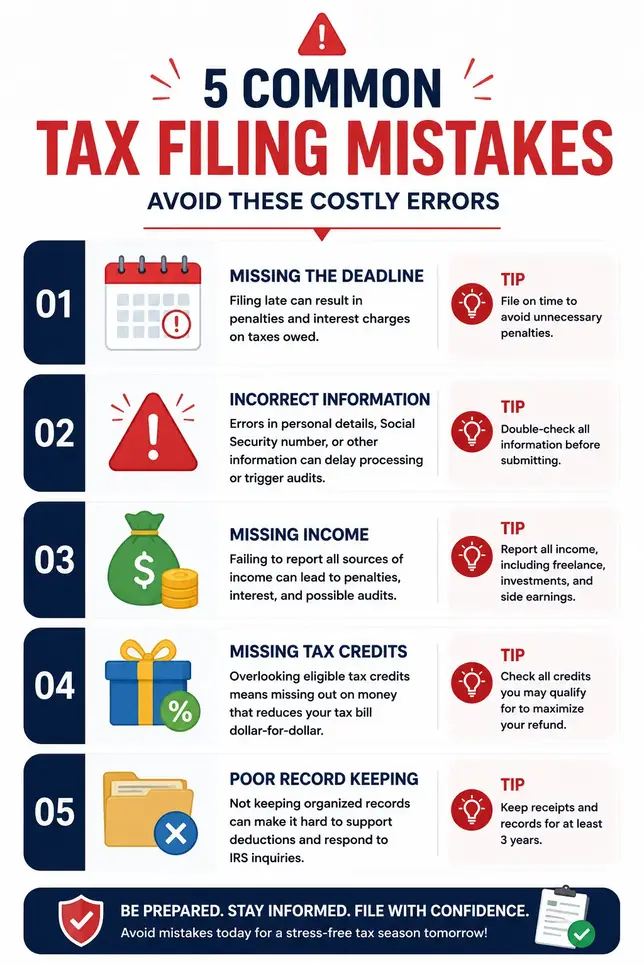
Common Tax Filing Mistakes
Even experienced taxpayers make mistakes, but many common errors are easy to avoid.
1. Filing After the Deadline
Missing the filing deadline can result in penalties, interest charges, or delays in receiving your refund.
2. Entering Incorrect Information
Mistakes in names, identification numbers, banking details, or income amounts can slow down processing or require corrections later.
3. Forgetting Income Sources
If you worked multiple jobs, freelanced, or earned investment income, make sure every reportable income source is included.
4. Missing Eligible Tax Credits
Many first-time filers overlook valuable tax credits simply because they aren’t aware they qualify.
5. Not Keeping Supporting Documents
Keep receipts and financial records for several years, depending on your country’s tax regulations. Proper documentation can help if questions arise after filing.
Pros and Cons of Filing Taxes Yourself
| Pros | Cons |
| Lower filing costs | Learning curve for beginners |
| Better understanding of personal finances | Greater chance of mistakes without guidance |
| Convenient online filing options | Complex tax situations may require professional help |
| Faster for simple tax returns | Can be time-consuming initially |
If your tax situation involves multiple income sources, investments, or business income, working with a qualified tax professional may be worthwhile.
Expert Tips for First-Time Tax Filers
Following a few best practices can make your first tax filing experience much smoother.
Start Early
Avoid waiting until the filing deadline. Starting early gives you time to gather missing documents and resolve any issues.
Double-Check Your Information
Before submitting your return, review:
- Personal details
- Income figures
- Deductions
- Tax credits
- Banking information
A few extra minutes of review can prevent delays and costly mistakes.
Use Trusted Tax Software
Many online tax preparation tools guide users through each step, automatically check for common errors, and simplify calculations.
Understand Your Refund
A tax refund isn’t extra income from the government. In many cases, it represents taxes that were withheld from your paycheck throughout the year.
Keep Organized Records
Store tax documents in one secure location. Good recordkeeping makes future tax filing faster and easier.
First-Time Tax Filing Checklist
| Task | Completed |
| Gather income documents | ☐ |
| Collect deduction records | ☐ |
| Determine filing status | ☐ |
| Calculate total income | ☐ |
| Apply deductions | ☐ |
| Claim tax credits | ☐ |
| Review your return | ☐ |
| Submit your return | ☐ |
| Save copies of your records | ☐ |
Real-Life Example
James recently graduated from college and started his first full-time job, earning $45,000 during the year.
Before filing his taxes, he gathered all of his income documents, used trusted tax software to prepare his return, claimed an education-related tax credit, and submitted everything electronically.
Because he organized his paperwork in advance and reviewed his return carefully, the filing process took only a few hours. A few weeks later, his refund was deposited directly into his bank account.
This example shows that good preparation can make first-time tax filing much less stressful.
Need additional help? If you’re unsure about your tax situation, visit the Consumer Financial Protection Bureau (CFPB) for practical guidance on taxes, budgeting, and financial planning, or consult a licensed tax professional.
Conclusion
Learning how to file taxes for the first time may seem overwhelming at first, but it becomes much easier when you break the process into manageable steps.
Start by gathering your documents, choosing the correct filing status, and understanding which deductions and tax credits apply to your situation. Take the time to review your return carefully before submitting it, and keep copies of your records for future reference.
Most importantly, don’t wait until the last minute. Preparing early, staying organized, and using reliable tax resources can help you avoid common mistakes and file your taxes with confidence year after year.
FAQ Section
Do I have to file taxes if I only worked part of the year?
Possibly. Filing requirements depend on your income level, filing status, and local tax laws.
What documents do I need to file taxes for the first time?
Most first-time filers need income forms, identification information, banking details, and records supporting deductions or credits.
Is filing taxes online safe?
Generally, yes. Reputable tax software providers use security measures to protect taxpayer information.
How long does it take to file taxes?
Simple tax returns may take one to three hours, while more complex situations can require additional time.
What happens if I make a mistake on my tax return?
Many tax authorities allow taxpayers to amend previously filed returns if errors are discovered.
Can I file taxes without a tax professional?
Yes. Many taxpayers with straightforward financial situations successfully file using tax software.
What is a tax refund?
A refund occurs when you paid more tax during the year than you ultimately owed.
What if I can’t pay my taxes?
Many tax authorities offer payment plans or other options for taxpayers who cannot pay immediately.
How long should I keep tax records?
Record retention requirements vary, but many experts recommend keeping tax records for several years.
What’s the difference between a tax deduction and a tax credit?
A deduction lowers taxable income, while a credit directly reduces the amount of tax owed.
Should college students file taxes?
Many students should file, especially if taxes were withheld from earnings or they qualify for education-related benefits.
What is electronic filing?
Electronic filing (e-filing) is the digital submission of a tax return to the relevant tax authority.
Educational Disclaimer
Disclaimer: This article is for educational and informational purposes only and should not be considered tax, legal, accounting, or financial advice. Tax laws vary by country, state, province, and individual circumstances. Consult a qualified tax professional or licensed advisor regarding your specific situation before making tax-related decisions.
