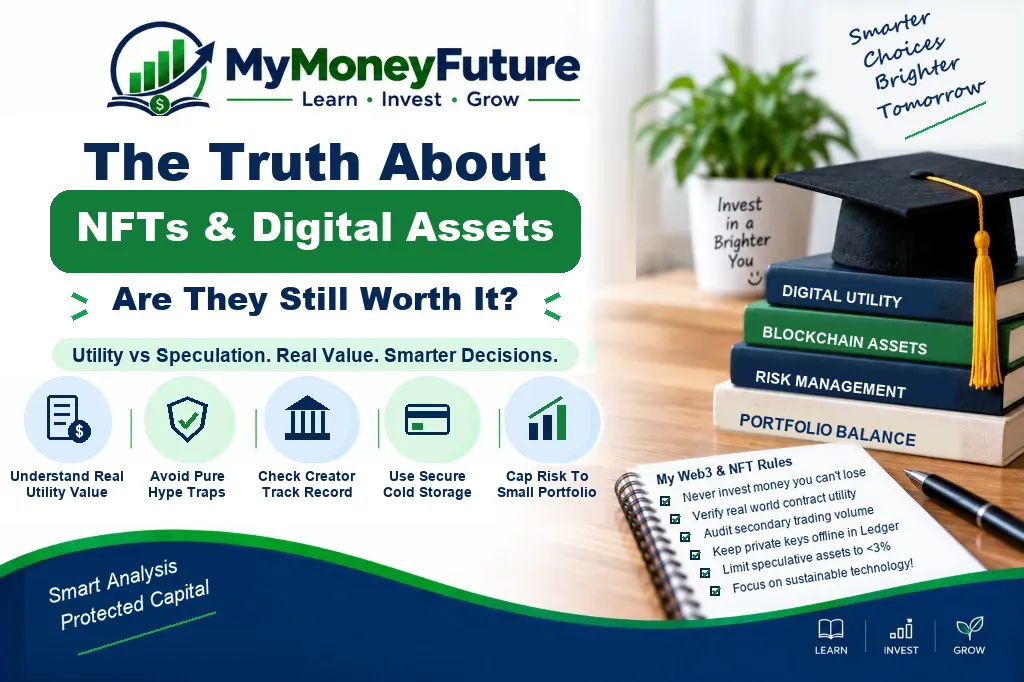
NFTs are not the overnight buzz story of the first major boom anymore. In 2026, the market is smaller, more discriminating and more cautious. That’s not always a terrible thing. Now that means purchasers have to look past celebrity drops, cartoon profile images and social media buzz and ask a tougher question: does this digital asset have a reason to exist?
NFT stands for non-fungible token and is a one-of-a-kind digital token stored on a blockchain. It can refer to art, membership access, in-game items, tickets, collectibles, music, digital identification tools or rights in the physical world. The key term is “can.” Just because you possess an NFT doesn’t mean you control the copyright, the business behind it, or that it will have a guarantyd future resale value.
NFTs are still dangerous for investors. Prices can swing abruptly, liquidity might evaporate, marketplaces can alter rules and ventures can collapse. Some NFTs may have cultural, communal, gaming or membership value. Many others may become useless.
In this article, we’re going to walk you thru whether NFTs are still worth investing in, how to appraise a project, the dangers that matter most, and how beginners can approach NFTs without risking money they can’t afford to lose.
Fast answer
For collectors, players, makers or investors who understand the hazards, NFTs can still be worth buying in 2026. They should not be considered as guarantyd investments. As for a good buy, it is a matter of utility, community, ownership rights, liquidity, security, taxes, and if you can afford a total loss.
Main Takeaways
| Important Point | What It Means |
| NFTs are speculative. | Prices are mostly driven by demand, community interest and market opinion. |
| Utility is more important now | Projects with access, gameplay, licensing or membership value may be worth more than hype-only drops. |
| Ownership is sometimes misinterpreted. | Copyright or commercial rights may not be included unless specified in the terms of the NFT. |
| No assurance of liquidity | Even if the floor prices seem attractive, you may not be able to sell it quickly. |
| Tax and Records Count | Digital asset transactions can trigger taxable events and must be carefully tracked. |
What NFTs Really Are
An NFT is a unique token that is represented by a record on the blockchain. Unlike a normal cryptocurrency token, each NFT is supposed to be unique. That distinctiveness is what made NFTs popular for digital art, collectibles, gaming items and online membership passes.
The image, video or file is not the NFT itself normally. It’s often a token that points to metadata or an object kept elsewhere. This is very important since the consumer needs to understand what he is actually buying.
When you buy an NFT of digital art, for example, you might get the token and a permission to exhibit the art. It may not allow you the permission to duplicate the work, sell items or use the image commercially. The rights are subject to the project terms.
That is why NFTs should be viewed less as magic internet property and more as a digital contract with technical, legal and market concerns.
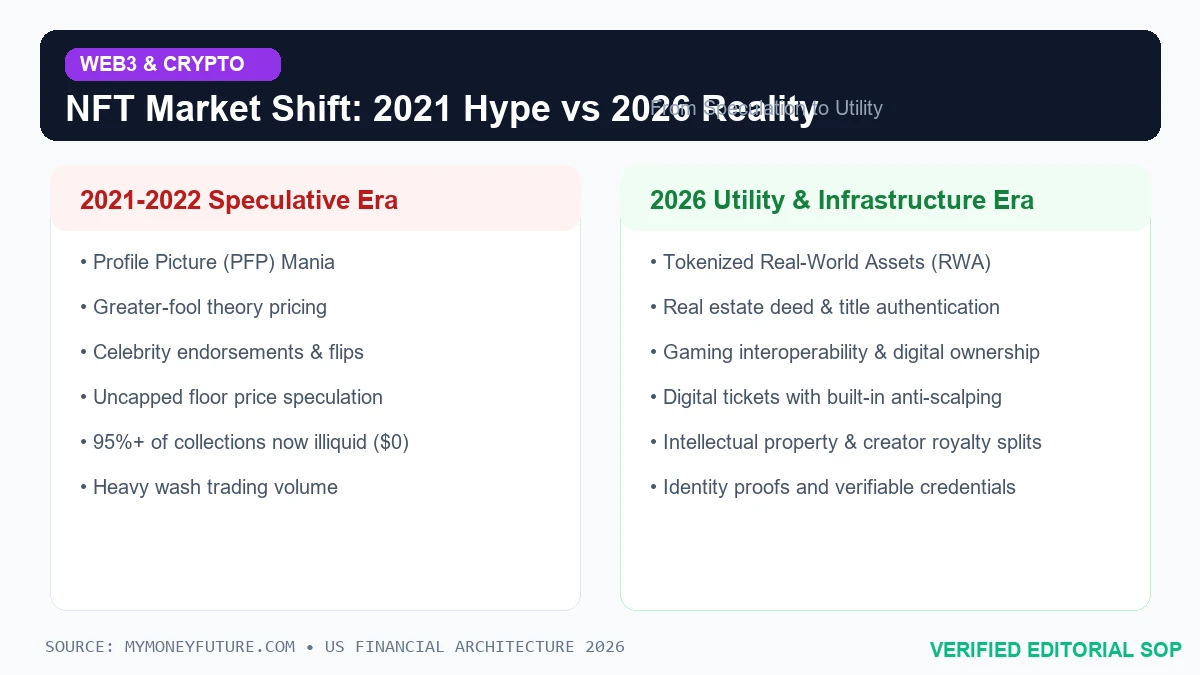
Risks include custody issues, fraud, market volatility and ill-defined investor safeguards. Before investing in any crypto-related asset, study investor education from SEC Investor.gov crypto asset resources.
Why NFTs Got So Popular
NFTs became popular because they solved one real problem — how can you establish that you own a digital asset recorded on a public ledger ? Before NFTs, digital files could be copied infinitely. NFTs could allow a buyer to establish ownership of a certain token tied to a digital asset.
It drew artists, musicians, game developers, sports brands, luxury firms and internet communities. NFTs for art in some projects. Others utilized them for access, loyalty incentives, event tickets, gaming assets or digital status.
The early boom encouraged speculation, too. A lot of purchasers weren’t collecting art or using a product. They had been trying to sell it to somebody else for a better price. That worked for some early buys, but also produced huge losses for late ones.
The 2026 market is more mature in one way, and more cautious in another. Buyers are asking smarter questions. Projects that do not have utility, real users or long term support are harder to sell.
Are NFTs Still a Good Investment?
NFTs can be investments but they don’t behave like stocks, bonds or index funds. A stock can mean ownership of a firm. A debt obligation can be a bond. An NFT can be art, access, membership, identification, a gaming object, or something totally different.
That makes it hard to price. Most NFTs have no standard way to report earnings. No dividend, no interest payment, often no dependable income flow. Price is influenced by narrative, scarcity, culture, reputation of the artist, market liquidity and trust in the community.
For that reason, beginners should not consider NFTs as a key investment. They are more often good as speculative assets or collectibles. The safest thing to do is to buy one and have the basic mindset of just using money you can afford to lose.
Some NFTs may go up in value. Not many will. The trouble is, it’s really difficult to tell the difference in advance.
NFT Use Cases That Still Count in 2026
| Application Scenario | Why it could matter | Primary Risk |
| Digital Art, | Supports artists and grants collectors verifiable ownership of a token. | Tastes vary and fluidity might disappear. |
| Assets for gaming | Can represent skins, goods or characters on supported systems. | Games can go awry or change the rules. |
| Membership tickets | Can access communities, events, discounts or private content | If the team ceases delivering, benefits can evaporate. |
| Credentials and Tickets | Can help reduce fraud and create verified ownership records. | The adoption is patchy. |
| Music & Creator Rights | Allows direct relationships between creators and fans. | Legal rights and royalties might be murky. |
| Real world asset tokens | May be claims attached to tangible things or rights. | Legal enforcability and custody are crucial. |
When an NFT May Be Worth Considering
If an NFT has some kind of value beyond resale speculation, it might be worth investigating. That could indicate that you actually like the art, use the game, attend the events, value the community or understand the rights tied to the token.
A strong NFT project often features clear documentation, a known team, realistic promises, active users, transparent ownership rights, and a product that still matters as market buzz dies down.
A bad project generally rely on vagueness in roadmaps, celebrity promotion, artificial scarcity, and promises that sound more like marketing than a business plan.
The best question isn’t “Is this going to go up?The better question is “Why would somebody want this three years out?If you can’t answer that cleanly, the investment case might be weak.
How to Evaluate an NFT Prior to Buying
| Checklist Item | Questions to Ask: |
| Usefulness | What does the NFT do beside existing? |
| Entitlements | Do I get commercial rights, personal usage, access or just the token? |
| Team | Who is behind the project and have they built anything credible? |
| Community | Are users engaged for actual reasons or just playing the price? |
| Cash Flow | The question is whether NFTs are genuinely selling at those prices or are just being listed at those prices. |
| Security | Marketplace, contract and wallet setup secure? |
| Charges | ### What are Marketplace Fees, Gas Fees, Royalties & Taxes? |
| EXIT STRATEGY | What would trigger me to sell or hold or walk away? |
The Biggest Risks of NFTs
Price Fluctuation
NFT prices can go down fast. A floor pricing can appear stable until the customers disappear. In thin marketplaces, a one or two sale can move the price you see and not show any true demand.
Digital Asset & NFT Risk/Return Evaluator
Assess Portfolio Risk & Allocation Limits
Evaluate digital collectible risk vs. tokenized real-world assets to avoid unrecoverable capital loss.
Liquidity is low
Stocks and ETFs are generally actively traded. Many NFTs don’t. You might have an NFT nobody wants to buy at the price you want to sell it for.
Rug Pulls & Scams
Some projects take the money and run. Others artificially boost demand with bots, phony followers, wash trading or influencer marketing.
Custody Errors
If you lose access to your wallet, sign a rogue transaction, or click a phishing link, the NFT could be lost forever.
Rights Undetermined
A lot of customers think they own more than they really do. The token may not carry copyright, licensing rights or control of the underlying asset.
Tax Complication
Tax reporting responsibilities may arise from buying, selling, trading, or utilizing digital or standard assets. Bad records can cause problems along the road.
The IRS considers digital asset activity to be something taxpayers may need to record for tax purposes and its IRS electronic assets guidance specifically includes non-fungible tokens in the IRS electronic assets that may have tax ramifications. IRS digital assets guidance
Simple NFT Due Diligence Process
- I bought it because it’s a good thing to own. Decide if you are collecting, using a product, supporting a creative or guessing.
- Read project terms. Look for copyright, commercial rights, resale royalties, return policies, and marketplace limitations.
- Check actual activity. Look at actual sales rather than just listed prices or social media buzz.
- Research the team’s history. Anonymous teams aren’t necessarily bad; they just add the need for extra prudence.
- Check the contract and the marketplace. Stick to well-known marketplaces and avoid clicking links in DMs.
- Add up all the costs. Add purchase price, transaction fees, marketplace fees, taxes, and any currency conversion.
- Set a limit for losses. What percentage of your portfolio should be in NFTs (if any)?
NFTs vs. Traditional Investments
| Feature | NFTs | Shares of Stocks/ETFs | Cash/Bonds |
| Profits | Usually none, except as it relates to incentives or rights. | May include dividend or earnings growth. | May earn interest income. |
| Valuations | Hard to put a price on. | Can use profits, revenue, cash flow and index data . | Can employ yield, maturity and credit risk. |
| Cash flow | Often slim and project specific. | High, as a rule, for big securities. | It provides stability to protected cash and high quality bonds. |
| Level of Risk | Extremely high and speculative. | Depends on the asset and diversity. | Usually lower, depending on the issuer and the term. |
| Best part | Speculative or collectible allocation. Small. | Wealth building over time. | Stability, income and emergency preparedness. |
How Much Should New Investors Spend on NFTs?
For most of the newcomers the answer can be zero. You don’t have to possess NFTs to get rich. Emergency savings, retirement accounts, index funds, insurance, and basic tax preparation can help you build a healthy financial future.
If you still want exposure, keep it low. For many conservative investors, speculative assets are just a small part of the overall portfolio. That might be 1% to 5% of investable assets, depending on your risk tolerance. Some folks should keep below that or not do NFTs at all.
Do not purchase NFTs with rent money, emergency savings, credit card debt, student loan money or retirement assets. If an NFT goes to zero, your core financial life should be fine.
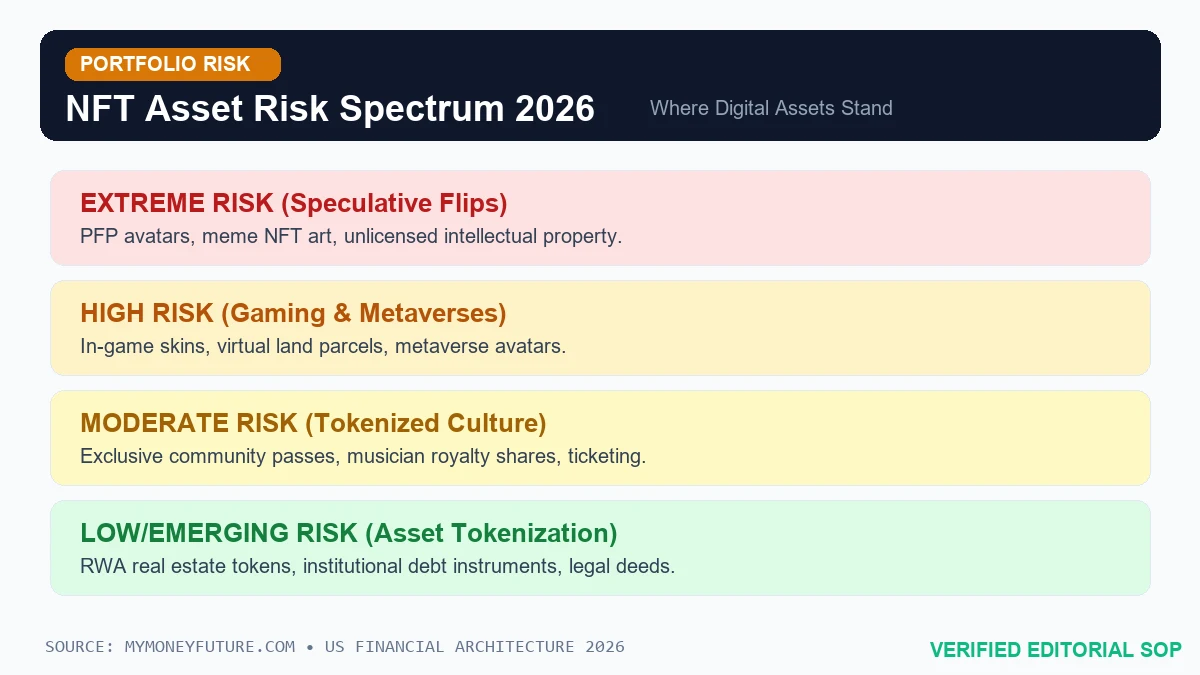
Good rule: Don’t buy if losing the full amount might affect your ability to pay debts.
Common NFT Investment Mistakes
- Buying because an influencer has pushed it.
- Mistaking a high quoted price for genuine market value.
- Excluding royalties, transaction fees and taxes.
- To take ownership of an NFT is to take possession of the copyright.
- Using a hot wallet recklessly or clicking on unknown URLs.
- Buying at launch without knowing supply, vesting or team incentives.
- Over-investing on a single speculative item in a portfolio.
Expert Tips for Safer NFT Exposure
- Keep a separate wallet for NFT activities so that your principal crypto holdings are not exposed to every transaction you sign.
- Don’t pursue floor prices. Concentrate on actual utility, real consumers and real demand.
- Keep a log of all buys, sells, fees and wallet transfers. If you keep records organized from the beginning, tax reporting becomes a lot easier.
- Avoid any investment promising rewards. NFTs are neither savings accounts, bonds or guaranteed deposits.
- Get to know the community before you buy. A healthy community is talking about the product, art, events or utility. A weak community speaks solely in terms of price.
- Be wary of urgency. “Mint now or lose forever” is usually a pressure strategy.
- Don’t make NFTs the foundation of your financial plan, but rather a minor side bet.
What First-Timers Should Do Before Purchasing an NFT
Before buying an NFT, a newcomer should first make sure that the rest of the financial basis is stable. That means cash for emergencies, no high interest debt that is spiraling out of control and a basic investing plan that does not rely on speculative digital investments.
Now comes the education. Take time to learn about how wallets function, how to store seed phrases, how phishing attacks happen, and how marketplace approvals can disclose assets. Many of the NFT losses aren’t from lousy market timing. These are the result of basic security errors.
Also it is good to monitor a project for a couple of weeks before you purchase. See how the team talks when prices drop, not just when a launch is big. Strong projects show their colors during quiet moments. Weak ventures tend to disappear after mint.
And last, write down why you’re buying it. If the only rationale is that the price might go up tomorrow, you are speculating. That might be fine with a small amount of money but should not be mistaken with long-term investing.
Frequently Asked Questions
Q: Are NFTs a good investment still in 2026?
A: For collectors or the experienced crypto user who is aware of the risks, NFTs are something to think about. For most newcomers, NFTs should be viewed as speculative collectibles, not as core investments.
Q: Can you profit from NFTs?
A: Yes, certain NFTs can go up in value or give you benefits but a lot of them go down in value. Profit is contingent upon demand, utility, market conditions, fees and your capacity to sell.
Q: Are NFTs safer than cryptos?
A: Not really. NFTs can be less liquid than other cryptocurrencies and have additional issues surrounding rights, information, marketplaces and frauds.
Q: If I purchase an NFT, do I own the art?
A: Not necessarily. You usually hold the token and any privileges the project gives you. The terms must specify copyright and commercial rights clearly.
Q: What is the tax treatment of NFTs?
A: NFT transactions may be taxable events. How You Are Taxed Depends on Your Country How You Got the NFT How You Sold It If It’s a Capital Asset or a Collectible or Business Asset or Income
Q: What’s the biggest risk in nfts?
A: The biggest risk is spending money based on hype, not value. Other significant dangers include frauds, theft of wallet, poor liquidity, ambiguous rights, and tax errors.
Q: Are NFTs a good investment for novices?
A: For beginners I would say start with emergency savings, basic investment, and wallet security. Use only money they can afford to lose for NFTs.
Q: What is the value of an NFT?
A: Art quality, creator repute, scarcity, utility, access, community, gaming utility, brand strength or legal rights. The price alone is not evidence of value.
Summary
NFTs are not extinct in 2026, but they are no longer easy-money lottery tickets. The hype cycle is passed, the market is selective. That’s better for serious users, but still deadly to buyers who don’t know the risks.
The finest NFTs you buy have a purpose. Art you like. Access you use. A game you play. A creator you trust. Rights you understand. The weakest buys rely only on the hope that someone else would pay more later.
NFTs should be a tiny part of a person’s investing plan, not the main thing. First Build Your Financial Foundation. And if you want to dip your toes in NFTs, do it gently, wisely, and with money you can afford to lose.
Education Warning
The material provided in this article is for educational and informational purposes only. This should not be considered financial, tax, legal, crypto or investment advice. The value of NFTs and electronic assets is highly speculative and may even become worthless. The taxation rules and laws are subject to change and vary from country to country. Please consult a skilled financial, tax, or legal professional before purchasing or selling NFTs.
Frequently Asked Questions (FAQ)
Calculate Your Long-Term Wealth Growth
See how compounding interest accelerates your net worth and calculate your exact FIRE retirement freedom number: