
Your credit score is one of the most pivotal pillars in your entire personal finance foundation. It directly influences your ability to qualify for credit cards, car loans, home loans, apartment leases, and other essential financial products.
Most people know a higher score is better, but few know what it actually measures or how their daily financial practices influence their score.
In Brief
Lenders use your credit score to estimate how likely you are to pay back the loan on time. The higher your score, the lower your risk for lenders. A lower score can mean missed payments, high balances, a short credit history, or other risk characteristics.
Quick Take: What Is a Credit Score & How Is It Calculated?
A credit score is a 3-digit number (300 to 850) measuring your financial reliability. It is calculated by FICO using 5 factors that make up credit score: payment history (35%), credit utilization (30%), credit age (15%), credit mix (10%), and new inquiries (10%). Understanding the fico score range chart 2026 helps you secure top-tier interest rates.
- What Is a Credit Score & Who Uses It?
- Importance of Credit Scores & Rates
- How Credit Scores Work (FICO vs. VantageScore)
- Credit Score Range (300 to 850 Chart)
- What Factors Affect Your Credit Score? (The 5 Factors)
- 🧮 Interactive Credit Utilization Calculator
- Comparing Credit Reports and Credit Scores
- How To Check Your Credit Score for Free
- How to Increase Your Credit Score Fast
- Real World Situation: Emily’s Case Study (640 to 730)
- Beginner Credit Scores Action Plan (Week-by-Week)
- To Summarize: Key Principles
- Frequently Asked Questions About Credit Scores
Good news: Your credit score is fluid like your habits! You can slowly build your credit profile by paying on time, managing your balances, and monitoring your credit reports.
Brief Synopsis
- What is a credit score?
A three-digit number (usually between 300 and 850) that shows how likely you are to pay back your loans on time. - Why is this important?
Your credit score is something lenders look at to determine your loan limits, interest rates, and approval. - Key Takeaways:
- Definition: A credit score is a measure of your creditworthiness. It is created from your credit report.
- Normal Range: 300–850
- Higher scores: Improve your chances of being approved and getting better rates.
- Key components: Credit mix, length of credit history, payment history, credit utilization, and new credit activity.
- Improvement: Pay on time, keep balances low, use sparingly, and check reports regularly.
What Is a Credit Score?
A credit score is a three-digit number that uses information from your credit reports—loans, credit cards, balances, payment history, and age of account—to reflect your past use of credit.
Who Is Using It?
- Banks
- Credit card companies
- Mortgage and auto lenders
- Some landlords
What It Is Not
It just considers how you’ve managed credit. It doesn’t consider your income, personality, employment, education, or net worth.
You might have bad credit and a high salary if you miss payments or have large obligations, or you might have excellent credit with a modest income.
Importance of Credit Scores
- Affects the cost of borrowing: You can save money by getting cheaper interest rates with better grades.
- Used outside loans: May be checked for utilities, rentals, insurance, and certain jobs (depending on area).
Briefly:
Bad credit can make simple things more costly or difficult, but good credit can open up other options.
Want to know more about how credit scores work and why they matter?
Check out the Consumer Financial Protection Bureau’s guide to credit reports and scores for trusted information.
When Credit Scores Are Important
Situation: How a credit score may matter:
- Credit card applications can affect approval, credit limit, and APR.
- Auto loans can affect interest rates and monthly payments.
- Mortgages can affect eligibility, rates, fees, and loan possibilities.
- In some places, deposits or prices can be affected by insurance and utilities.
- Landlords or screening organizations may look at a rental apartment.
Example Applicants
| Applicant | Credit Score | Lender’s Opinion |
| Sarah | 790 | Less risk; can get better terms |
| John | 620 | More risk; may pay more in rates |
John may qualify, but his loan will probably cost more each month. It’s usually smart to work on your credit before applying for a big loan.
How Credit Scores Work
Credit scoring models look at your credit information and give you a number. Different organizations use different formulas, so you might get several scores.
Key models:
- The FICO score is a common score used.
- It was created by the three major credit bureaus and is called VantageScore.
- Formulas internal to the lender.
One number: Your score might be different depending on the source. Focus on your habits, the general trend.
Credit Score Range
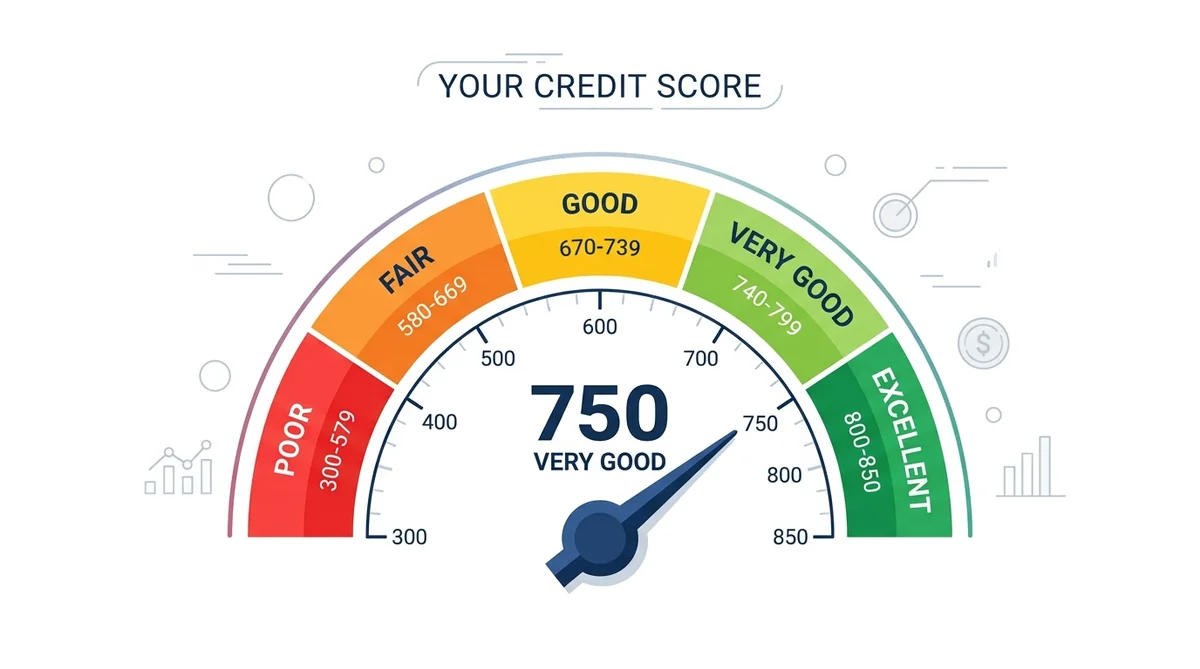
- 300–579: Bad, high rates
- 580–669: Harder to approve, terms not as favorable, but fair approval possible
- 670–739: Good, acceptable or good to many lenders
- 740–799: Excellent, may qualify for improved terms
- 800–850: Very little risk, easy approvals
These are general guidelines only. Lenders also take into account employment, debt, income, and other factors.
What Is a Good Credit Score?
- A score of 670 or higher is generally considered good.
- You’re probably looking at the best terms if you’re in the mid-700s or higher.
- The right score depends on the product (credit card or mortgage).
- Lenders also evaluate your debt-to-income ratio and annual income documentation; first-time buyers should review our guide on how to file taxes for the first time to understand W-2 and Form 1040 reporting standards.
Advice:
Check your credit a few months before you apply for big credit. Correct mistakes, reduce balances, and avoid useless applications.
What Factors Affect Your Credit Score?
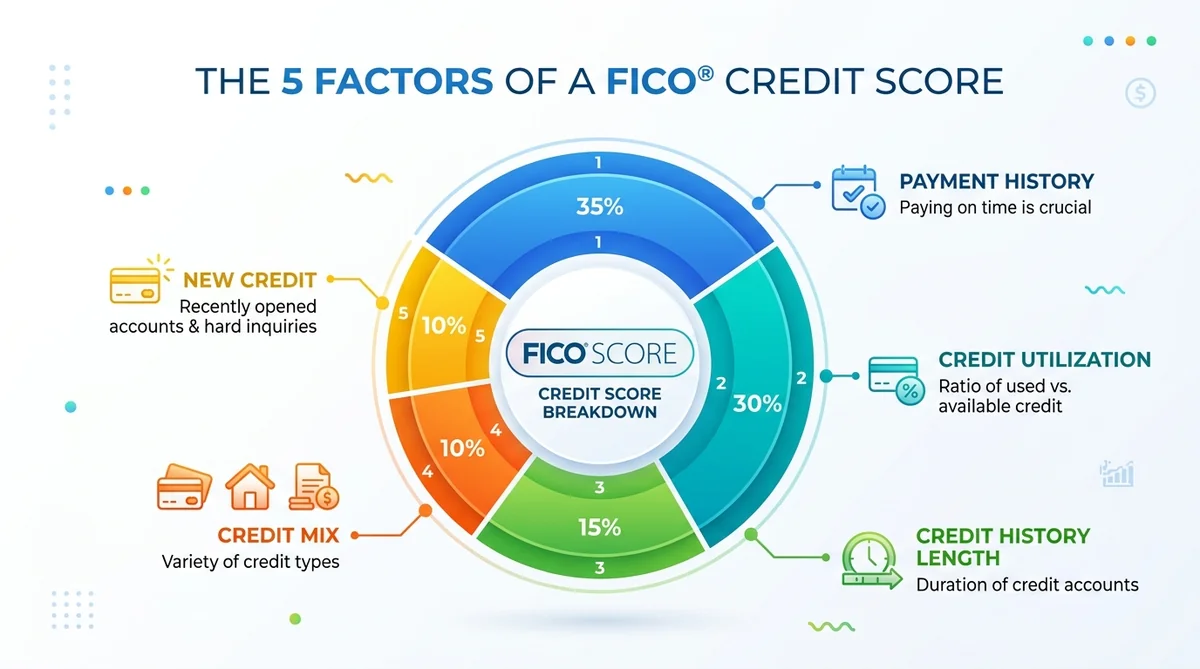
Payment History
- Most important part
- Bankruptcy, defaults, collections, and late payments all hurt your credit score.
- Automate your payments by creating a monthly budget step-by-step so your fixed debt obligations are funded before discretionary spending.
Use of Credit
🧮 Interactive Credit Card Utilization Calculator
FICO 30% WeightEnter your total credit card balances and combined credit limits to instantly see your credit utilization ratio and its impact on your FICO credit score:
💡 CFP Pro Tip: At 30%, you are right at the standard threshold. Paying down an additional $1,000 to drop your utilization under 10% can boost your FICO score by 15 to 30 points.
- The amount of credit you have available.
- Formula:
Credit utilization = total balances / total limits
Try to stay under 30% (under 10% is optimal). If high revolving balances are hurting your score, consider using balance transfer cards to pay 0% interest on debt while you aggressively pay down principal balances.
| Total Limit | Balance | Utilization |
| $10,000 | $2,000 | 20% |
| $10,000 | $5,000 | 50% |
| $2,000 | $1,800 | 90% |
Length of Credit History
- Closing old accounts could be harmful; a longer history is preferable.
- If you are new, don’t worry—everyone has to start somewhere.
Credit Mix
- Though not as much as payment history/utilization, a combination of cards, loans, and other credit can be beneficial.
- Only borrow when you have to.
New Credit Applications
- Doing too many tough questions in a short amount of time could hurt your score.
- Apply only as necessary.
Comparing Credit Reports and Credit Scores
- Credit Score: Three-digit summary of your record.
- Credit Report: Detailed record listing each account—compiles all the data.
- Reports may contain errors. Always check your credit reports because errors can lower your score.
Need help getting your free credit report?
Visit USA.gov’s official credit reports page for guidance on how to access your reports at no cost.
How To Check Your Credit Score
- Use a trusted monitoring service, credit bureau, bank, or card issuer.
- Checking your own credit score is considered a soft pull and will not affect your score.
- Check out your model or score range and think about what went into your score.
- Check reports for errors or strange accounts regularly.
- Keep an eye on patterns rather than daily variations.
How to Increase Your Credit Score
- Pay all bills on time: Use reminders or auto-pay.
- Lower credit card balances: Focus first on paying off your highest interest rate cards using the proven debt avalanche or snowball strategies in our guide on how to get out of debt fast.
- Don’t install unnecessary apps: Use prequalification tools where available.
- Keep your old, good accounts open if they don’t tempt you or cost you an arm and a leg.
- Verify credit reports for errors: Challenge any errors you find.
- If you are new, build credit slowly: Start with secured cards or as an authorized user.
How Much Time Does It Take to Improve Credit?
- Fast adjustments: Reducing revolving balances can boost scores quickly; for rapid turnaround strategies, follow our actionable guide on how to raise your credit score 100 points quickly.
- Significant problems: It could take a lot longer to recover from missed payments, bankruptcy, or a brief history.
- Strategy: Focus on what you can handle month by month—continuous development is most important.
Typical Errors in Credit Scores
- Automate or set reminders for outstanding invoices.
- Keep balances low; don’t max out the cards.
- Applying for too many accounts: Use this only as needed.
- Ignoring reports: Some errors might go unreported.
- Recklessly closing old accounts: Think about it.
- Carrying a balance on purpose: Just pay your bills on time, it doesn’t have to be this way.
Pros and Cons of Credit Scores
Advantages:
- Quick approvals
- Promotes responsible conduct
- May make you eligible for lower rates
- Provides a specific target for improvement
- Sets a standard for measuring risk
Disadvantages:
- Doesn’t really give you the whole picture of your finances
- Bad marks could last for years
- Different models have different scores
- Errors can affect a score
- Assessment of thin files is more difficult
Keep in mind: A credit score isn’t a moral judgment, it’s a risk assessment.
Expert Tips for Building Good Credit
- Start soon, but watch out: You may make mistakes early on.
- Use credit as a tool: Only take out what you can afford to pay back.
- Keep utilization low before large applications: Clear what you owe before you take out big loans.
- Don’t aim for a perfect score: Aim for adequacy, and practice healthy routines.
- Identity verification: Be vigilant against fraud, and move quickly if you observe any illicit activity.
Real World Situation
Emily is looking to buy her first home. She had a starting score of 640, which isn’t great, but isn’t bad enough to get the best rate. Over the course of a year, she checks reports, builds an emergency fund, avoids opening new accounts, lowers balances, and pays all of her bills on time. With a score of 730, she is more likely to get better financial terms on her mortgage.
Once Emily secured her mortgage with a low interest rate, she redirected her monthly interest savings into long-term wealth building, following our beginner roadmap on how to invest your first $100 into low-cost index funds.
Instruction:
Some planning before you put pen to paper for a major loan can go a long way.
🚀 Strategic Roadmap to an 800+ Credit Score
Reaching top-tier credit is not about luck—it is about systematic consistency. By automating minimum payments, keeping credit card utilization strictly under 10%, and monitoring your reports for discrepancies, you unlock preferred borrowing terms that can save you upwards of $50,000 in interest over your lifetime.
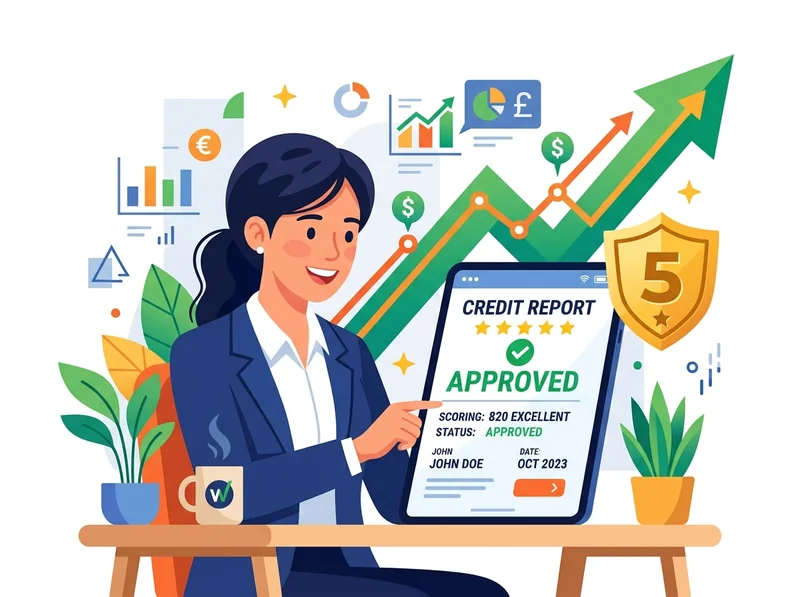 Credit Milestone Tracking
Beginner Credit Scores Action Plan
- Week 1: Review your credit score
- Week 2: Check reports for errors or unknown accounts
- Week 3: Arrange automatic payments or reminders
- Week 4: Develop a debt reduction plan using the 50/30/20 budget rule for beginners, reserving 20% of net income specifically for debt payoff and emergency funds.
- Month 2–3: Assess progress and reward positive behaviors; deny new applications; keep utilization low
To Summarize
A credit score is not just some random number. It is a summary of your credit history that is used by lenders and other decision-makers. Knowing your score will help you make better financial decisions. Timely payments, low balances, and checking reports are the key factors to a better credit profile and more financial freedom.
Frequently Asked Questions About Credit Scores in 2026
What is considered a good credit score in the USA?
Under the FICO scoring model, a score between 670 and 739 is considered Good. Scores from 740 to 799 are Very Good, and 800+ is considered Exceptional, qualifying you for the most competitive mortgage and auto loan terms.
What is the difference between FICO Score and VantageScore?
While both use a 300 to 850 range, FICO Scores are used by over 90% of top US lending institutions for mortgage and credit decisions. VantageScore (created by the three credit bureaus) requires only 1 to 2 months of credit history to generate a score, whereas FICO requires at least 6 months.
How does credit card utilization affect my score?
Credit utilization makes up 30% of your FICO score. It measures how much of your revolving credit limits you use. Keeping utilization below 30% is good, but maintaining it under 10% on each card yields the highest possible score boosts.
How does my credit score affect mortgage rates in 2026?
A borrower with an exceptional credit score (760+) can save over 0.5% to 1.5% on their mortgage APR compared to a borrower with a 640 score, translating into tens of thousands of dollars in interest savings over a 30-year loan.
How fast does a credit score update?
Credit card issuers and loan providers report account activity to Equifax, Experian, and TransUnion once per billing cycle (typically every 30 to 45 days). Paying down balances often reflects in your score within 30 days of the statement closing date.
How can I check my credit score for free legally?
Under federal US law, you can access your official credit reports weekly for free at AnnualCreditReport.com without impacting your credit scores.
Disclaimer: The purpose of this article is to inform and educate the reader about the topic discussed herein; we attempt to provide up-to-date factual material that is accurate; however, we do not guarantee any of this information as complete or correct; you must make your own financial decisions based upon your own situation (e.g., your financial goals) and willingness to take on risk; any actions you take as a consequence of this article’s contents are at YOUR RISK.
Accelerate Your Financial Freedom with My Money Future
Mastering credit score building is your foundation. Discover step-by-step blueprints, practical guides, and expert tools to eliminate high-interest debt and grow your long-term wealth:
Free actionable financial guides trusted by smart everyday readers on MyMoneyFuture.com
Crush Debt & Save on Interest Charges
Compare the Debt Snowball vs. Avalanche strategies and see your exact debt-free date with our interactive tool: