Introduction
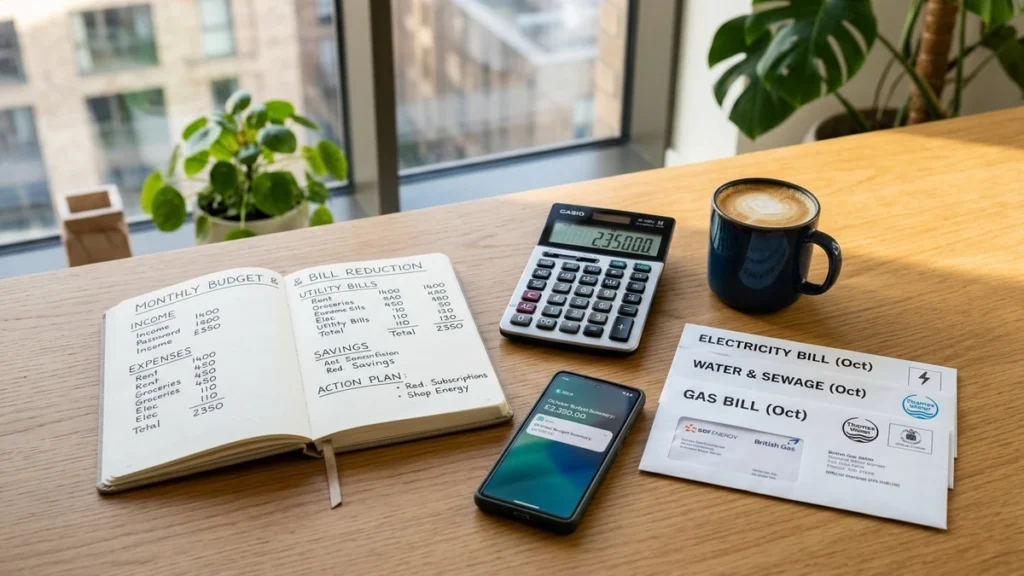
Cutting down your monthly expenditures by $500 may seem like a huge amount, but for many households this is doable if you cut down on multiple different areas.
It’s not about living badly, canceling everything you want. The aim is to locate waste, renegotiate expenses, drop expensive habits, and funnel the money into savings, debt repayment, or breathing space.
Most folks don’t put aside $500 from one bill. They save $25 here, $60 there, $100 someplace else and all of a sudden the difference each month is real.
This tutorial will teach you how to save $500 on your monthly expenditures with realistic modifications that won’t need you to get a second job or live in extreme frugality.
You can apply the entire strategy or pick the modifications that work for your life.
Short answer
To slash $500 from your monthly bills, review all recurring costs, cancel unused subscriptions, negotiate your phone and internet plans, shop around for insurance rates, cut down on food waste, reduce your energy consumption, refinance or restructure costly debt if appropriate, and establish spending limits for flexible categories such as dining out and shopping.
Key Points
| Main Point | Summary |
| Begin with Recurring Bills | Monthly charges are powerful because the savings are recurring every month. |
| Small Cuts Mix | Savings of $25 to $100 several times can add up to $500. |
| Negotiate before you cancel | You might save on your phone, internet, insurance and memberships. |
| Food Spending Is a Huge Opportunity | Big savings come from less waste and meal preparation. |
| See the savings add up | Move saved money immediately so it doesn’t get lost to other spending. |
Step 1: Find All Your Monthly Bills
Be sure you have the whole list before you start cutting.
Look over your bank statements, credit card statements, payment apps and email receipts for the last three months.
Write out all reoccurring costs.
| Categories | Examples: |
| Shelter | Rent, mortgage, HOA, property costs |
| Utlities | Electricity Water Gas Trash Internet |
| Insurance. | Auto, renters, homeowners, health, life insurance |
| Subscribing | Streaming, apps, software, memberships |
| Telephone | Mobile plan, device charges, add-ons |
| EAT | Food, delivery, restaurants, coffee |
| Transport | Parking, Tolls, Transport, Fuel |
| Debt. | Credit cards, school loans, personal loans |
| Life Style | Fitness, pastimes, looks, retail therapy, fun |
The Consumer Financial Protection Bureau has tools to help you track income, bills, spending, and financial objectives. If you like a worksheet approach, use the CFPB’s Your Money, Your Goals resource to develop your bill-cutting plan.
This initial step is important because hidden bills are not rare.
Many are surprised to find subscriptions they forgot they signed up for, app fees, insurance add-ons or memberships.
Step 2: Cancel or Reduce Your Subscriptions
Subscriptions are usually the easiest place to start.
They are small enough to ignore, yet large enough to matter when combined.
Search For:
| Subscription Category | Possible Action |
| Streaming services | Keep one or two, rotate the rest |
| App subscriptions. | Cancel tools you use rarely |
| Storage on the cloud | No extra room required? Downgrade |
| Fitness apps | Cancel duplicates with gym pass |
| News & Magazines | Only keep what you read |
| “Delivery memberships | Cancel if they make impulse orders |
| Softwares | Switch to cheaper or free options |
Example savings:
| Slice | Savings per Month |
| Cancel 2 streaming services | $30 |
| Cancel unused subscriptions of apps | $20 |
| Cancel delivery of subscription | $10 |
| Cloud storage downgrade | $5 |
| Total | $65 |
The federal trade commission suggests consumers preserve records of cancelations and look for recurrent membership charges. If a company makes canceling difficult, its guidance to free trials and auto-renewal memberships is useful.
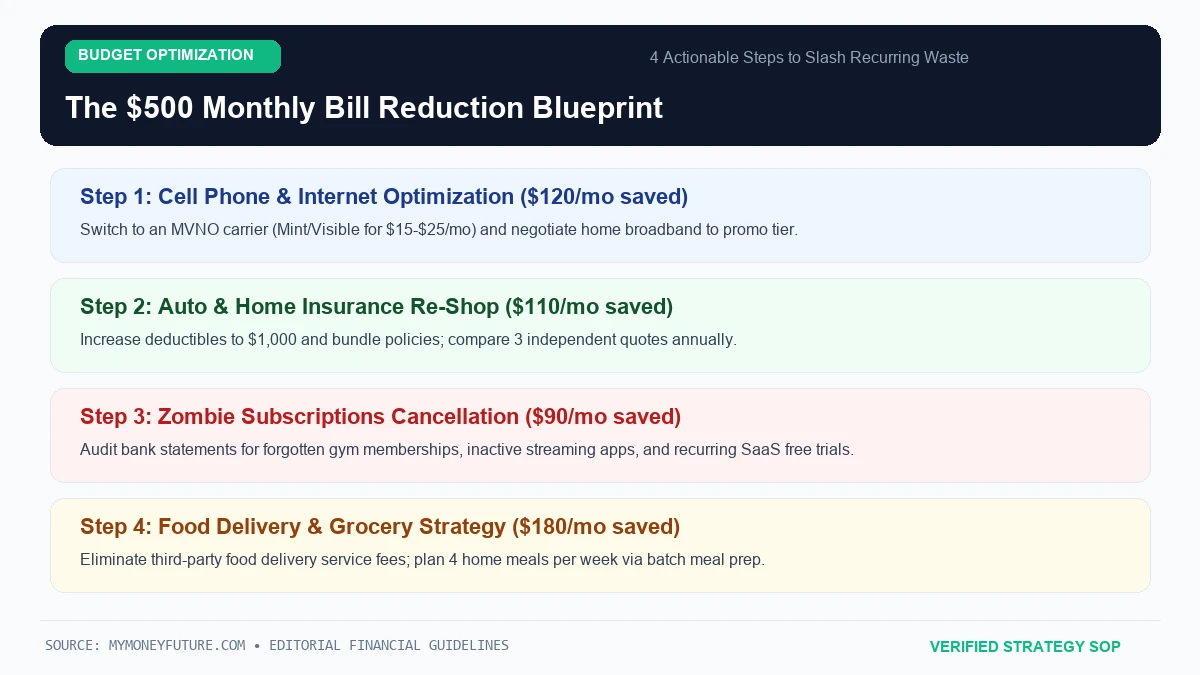
Don’t give up and walk away. Immediately transfer that cash to savings or debt payoff.
3. Reduce Your Phone Bill
The cost of your phone plan can be quietly inflated by device charges, insurance, foreign add-ons, extra lines and older plans.
Call your provider or check your account online.
Ask yourself these questions:
- Am I paying for more data than I’m using?
- Do I still require device insurance?
- Do you have lower cost options for the same usage?
- Can I move to prepaid or a smaller carrier?
- Do I save with a family plan?
- Did I forget to pay for the add-on’s?
Potential savings:
| Switch | Monthly Saving |
| Consider a lower data plan | $15-$30 |
| Delete device insurance | 10 to 20 $ . |
| Change to prepaid | $20-60 |
| Mix traces | $10–$40 |
| Remove useless add ons | $5-$15 |
A realistic reduction in your phone expense is $25 to $75 a month.
If you don’t have to pay off your phone, don’t get a new one just because your carrier has a monthly payment plan. A new device payment can drain your savings.
Step 4: Re-negotiate Your Internet and Cable
Another big possibility is on the Internet and cable bill.
A lot of homes are paying for speed, channels or bundles they don’t need anymore.
Check your actual internet use first If a household streams, works from home and uses video calls, it might require robust internet. But it doesn’t necessarily mean the priciest plan.
Ask your provider:
- Is there a cheaper plan to how I use it?
- Are there any current deals for existing customers?
- Can I cut cable and just get internet?
- Can I use a third party router or modem?
- Are there fees I can get rid of?
Possible savings:
| Change” | Save Every Month |
| Delete cable package | $50-150 |
| Slower internet speed | $10-$30 |
| Bring your own equipment | $10-$15 |
| Cancel premium channels | $15-$50 |
| Change provider | $20–$60 |
A household with cable may often save more than $100 a month by switching to internet only plus one streaming provider.
If you already cut cable, simpler internet improvements could still save you $10 to $30.
Step 5: Purchase Insurance Premiums
Insurance can be costly yet many individuals renew insurance without browsing around.
Costs for auto, renters, homeowners and life insurance might differ among insurance companies.
Don’t just cut coverage indiscriminately. The argument is that you should not overpay for similar protection.
Ways to save include:
| Strategic | How It Works |
| Get Quotes | Different insurers value risk differently |
| bundled policies | Some firms provide multi-policy savings. |
| Carefully raise deductibles | Can reduce premium if you have emergency savings |
| Ask for a discount | “Student good, security devices, low mileage, good driver” |
| Clear old cover | especially on older automobiles if applicable |
| Give credit where it is due | Some regions rely on insurance credit scores |
Depending on what you are paying now, you might save between $20-$150 each month.
If you raise deductibles, be sure you have adequate cash to afford the greater out-of-pocket expense.
If one claim produces a financial emergency then saving on premium is not worth it.
Step 6: Trim Grocery Costs Without Going Hungry
Food is one of the best locations to save because little things happen every week.
You don’t have to buy the cheapest meal you can find. It’s about waste reduction, meal planning, not impulse buying, and using what you have.
Try these modifications:
| Strategy | The Reason It Works |
| Plan meals before you shop | Lessens impulse buying |
| Select from a list | Maintains the focus of the trip |
| Use up pantry stuff first | Avoids waste |
| Buy store brand. | Often cheaper than brand names |
| Cook more food | Makes leftovers for lunch |
| Limits on delivery apps | Tipping and fees may add up fast |
| Compare price per unit | Helps you find better value |
Sample savings:
| Alter | Money Saved Monthly |
| Cut back on delivery orders | $100 |
| Swap some stuff for store brands | $40 |
| Lunch From Leftovers | $80 |
| Stop wasting food | $40 |
| Totale grand | $260 |
Groceries and restaurant expenditures can make or break a $500 savings goal with ease.
Think your food expense is high? Track your food spending for one month before you make any changes. The statistics will tell you where to start.
Step 7. Lower your utility bills
The utility savings may not be substantial month to month but they are repeatable.
$500 Monthly Bill Reduction & Wealth Accelerator
Select Your Target Cuts & See Your 10-Year Wealth
Toggle your monthly bill reductions across phone, insurance, subscriptions, and dining to reveal your compounding fortune.
Begin with heat, cold, electricity, water and gas.
Practical changes include:
- Adjust thermostat settings a few degrees
- Seal drafty doors and windows
- Always wash items with cold water when you can”
- Run dishwasher and washing machine on full loads
- Turn off lights and electronics when you aren’t using them
- Replace incandescent lights with LED bulbs
- Repair leaks rapidly
- Use ceiling fans to decrease cooling load
- If available in your area, compare utility plans
Possible savings:
| Change” | Savings per month |
| Changing the Thermostat | $10-$30 |
| LED light bulbs and appliances use | $5 – $20 |
| Less water use | $5-15 |
| repair leaks | Depends |
| WasteEnergy disposal | $10-25 |
You may reasonably expect to save anywhere from $20 to $60 a month.
The biggest savings frequently come from practices around heating and cooling.
Step 8: Reduce Your Debt Payments the Smart Way
Much of the monthly income can be spent on debt payments.
If you can cut your loan repayments that will increase cash flow. Caution.
While a lower monthly payment may seem like a better deal, it can end up costing you more in total interest.
Options might include:
| Selection | Potential advantage | Beware of |
| Transfer Balance | Short-term rates are lower | Promo Deadline & Fees |
| Loan for debt consolidation | Possibly reduced single payment rate | Longer term can cost more |
| Re-mortgage | Lower pay or rate | Fees and rules on who can qualify |
| Plan of hardship | Short-term alleviation | May impact account terms |
| Other payments | Interest diminishes over time | Requires budget space |
Compare overall cost, not just monthly payment, if you consolidate or refinance.
If money is tight, a reduced payment can help. But spreading debt out across years may not save money.
Step 9: Review Bank Fees and Payment Expenses
Small fees can gradually drain money.
Look out for:
| Type of Fee | Possible Solution: |
| Bank fees a month | Switch to a no-fee account |
| ATM charges | Use ATM in network |
| Overdraft charges | Set alerts or turn off overdrafts |
| Late Payment Penalties | Automate minimums |
| Payment processing charges | Use payment methods that are free |
| Foreign Transaction Fee | Employ cheaper transfer or card options |
Here you can only save 10 to 40 dollars a month.
But this area is still worth mending, because fees get you nothing in return.
Step 10: Watch Out for Dining Out and Convenience Expenses
Eating out, coffee, snacks, delivery costs, ride shares and quick convenience buys all add up fast.
This doesn’t imply you can never eat out.
It suggests it should be selected with care.
Try a monthly limit.
| kind | Old Expenditure | New Expenditures | Savings |
| Restaurants | $300 | $180 | $120 |
| Coffee. | $90 | $35 | $55 |
| Shipping Costs | $80 | $20 | $60 |
| Snack convenience | $60 | $25 | $35 |
| Totale | $530 | $260 | $270 |
One of the quickest methods to achieve savings without changing fixed expenditures is by food convenience.
The idea is to have back-up meals at home so you don’t find yourself compelled to make last-minute purchases.
Step 11: Apply a $500 Savings Stack
Instead of trying to make one big cut, build up a pile of savings.
Here’s one from real life:
| Alteration | Savings Per Month |
| Unsubscribe | $65 |
| Reduced phone bill | $40 |
| Lowered cable/internet expenses | $90 |
| compare insurance quotes | $75 |
| Cut down on groceries and delivery | $180 |
| Reduced utilities | $30 |
| Avoid bank / late fees | $20 |
| Total Savings | $500 |
That’s the power of transformation, paired.
None of these cuts need you to live like a miser. But collectively they generate meaningful breathing space.
Step 12: Make Savings Stick
Cutting bills is useful Once. Better to keep them modest.
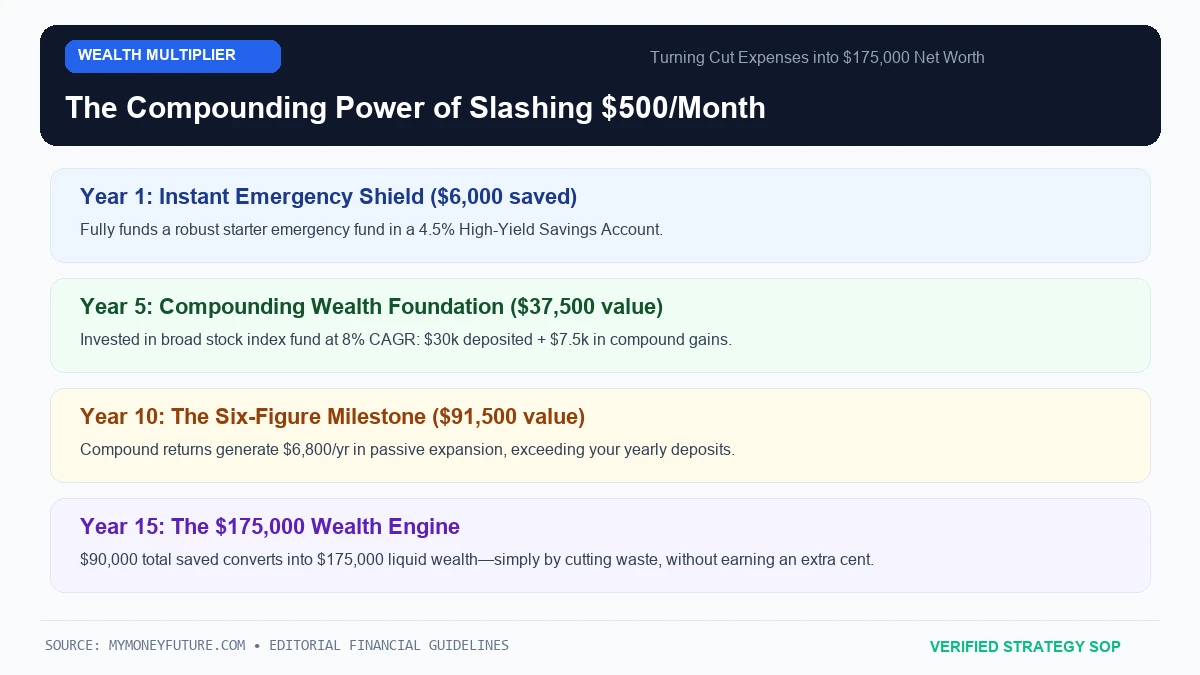
Use a system and you’ll not lose the savings.
Try this :
- Write down each bill you cut down.
- List exactly how much cash you are saving every month.
- Set up an automatic transfer for that amount.
- Transfer the money to savings, debt payoff, or a specific goal.
- Review bills on a quarterly basis.
Example:
| Saved From: | Quantity | Where It Goes |
| Phone bill | $40 | Emergency fund |
| Stream | $30 | Paying off debt |
| Inurance | $75 | Savings” |
| Food expenses | $150 | Credit card payment |
But if you don’t reallocate the savings, it frequently gets eaten up by other spending.
Get your stored cash working.
Frequent Errors
Cutting Too Deep Too Fast
If you take away all the fun things to do, the strategy may fail.
Keep some for fun so the budget is livable.
Ignore large fixed expenses
Subscriptions matter, but housing, transportation, insurance and debt are frequently larger.
Inspect small and large denominations.
Just Considering Monthly Payment
Lower monthly payments may cost you more in the long run.
This is especially true with loans and debt consolidation.
Neglecting Yearly Bills
Unanticipated expenses may include insurance, subscriptions, memberships, gifts, school, and taxes.
Split your yearly bills into 12 and save weekly.
Results are not tracked
You may not feel the progress without measuring savings.
A basic spreadsheet, diary, or budgeting app.
Expert Advice
Negotiate Nicely :
Call your providers and seek to be put on a lower plan or ask about retention offers.
You don’t need to be aggressive. Show that you are considering alternatives.
Utilize Calendar Reminders
Make sure you set reminders so you don’t miss out when the promo rates are over.
There are no sudden price rises.
Shop for insurance once a year.
Insurance rates fluctuate. Your situation also changes.
Annual comparison can avoid overpaying.
Create a No-Spend Reserve
Two no-spend days every week on discretionary purchases.
That can help curb impulse purchasing, without making the whole month feel like a drag.
Maintain One Pleasure Category
A budget without any fun is hard to stick to.
Pick a category you care about, and be much tougher on the rest.
Frequently Asked Questions
Q: Can I truly save $500 a month on my bills?
A: Many families can, especially if they have subscriptions, high food spending, pricey insurance, cable or phone services. Usually, the savings come from a combination of multiple categories.
A: Which bill do I cut first?
A: Begin with the monthly subscriptions and phone or internet costs. These are usually easier to adjust than housing or debt payments.
Q: How can I bring down my groceries bill?
A: Meal planning, shopping with a list, buying generic brands, reducing food waste, eating leftovers, and not using delivery apps.
Q: Is it possible to cancel all subscriptions?
A: Nope. Keep the ones you truly use and enjoy. The rest can be rotated or canceled.
Q. How often should I review bills?
A: Check bills every three months, and when a promotional rate ends, your income changes, or a supplier raises pricing.
Q: Does refinancing debt help reduce bills?
A: It can help if it reduces interest or increases cash flow, but compare overall cost and fees before refinancing or consolidating.
Q: How do I keep my savings from disappearing?
A: Move saved money to a savings account, debt payment, or specific purpose immediately right after the bill drops.
Q: What if I can’t come up with $500 right away?
A: Start with $100 or $200. Whatever you can save each month, repeated, will help your budget.
Q: Is it smart to cut your insurance coverage to save money?
A: Take care. You can shop around and change deductibles, but don’t cut essential coverage to save money on the premium.
Q: Which category is the easiest to trim?
A: Often the quickest are food delivery, subscriptions, shopping and phone plans, because these may be adjusted on the spot.
Summary
You don’t have to make one big sacrifice to shave $500 off your monthly costs.
It is about identifying several repeatable savings and making them permanent.
Begin with reoccurring bills. Cancel stuff you don’t utilize. Negotiate phone & Internet. Insurance for shops. Cut down on food waste. Control eating out. Here come the bank fees. Consider debt options carefully.
Then, before you spend it elsewhere, transfer the savings.
Cutting $500 a month adds up to $6,000 a year. That money can build an emergency fund, pay off debt, finance investing or simply make your monthly life less stressful.
The smartest savings plan is not the most severe one. This is the one you can use month after month.
Education Disclaimer
This page is for educational and informational purposes only. This should not be considered financial, legal, tax, credit or insurance advice. Savings results depend on income, region, household size, contracts, loan terms, and provider availability. Before canceling, refinancing or switching financial instruments, read the terms carefully.
Frequently Asked Questions (FAQ)
Take Control of Your Budget Instantly
Don't just read about money management—calculate your exact monthly breakdown right now using our free financial tools: