Introduction
Owning a car can feel simple when you only look at the monthly payment. The real cost is much bigger. Insurance, fuel, maintenance, repairs, registration, parking, taxes, financing, and depreciation all add up quietly.
For many households, a car is necessary for work, school, family life, and daily errands. That does not mean every car purchase is affordable. A vehicle can be useful and still be one of the most expensive items in your budget.
The problem is that many buyers calculate the cost of the car, not the cost of owning the car. That gap is where budgets get stretched.
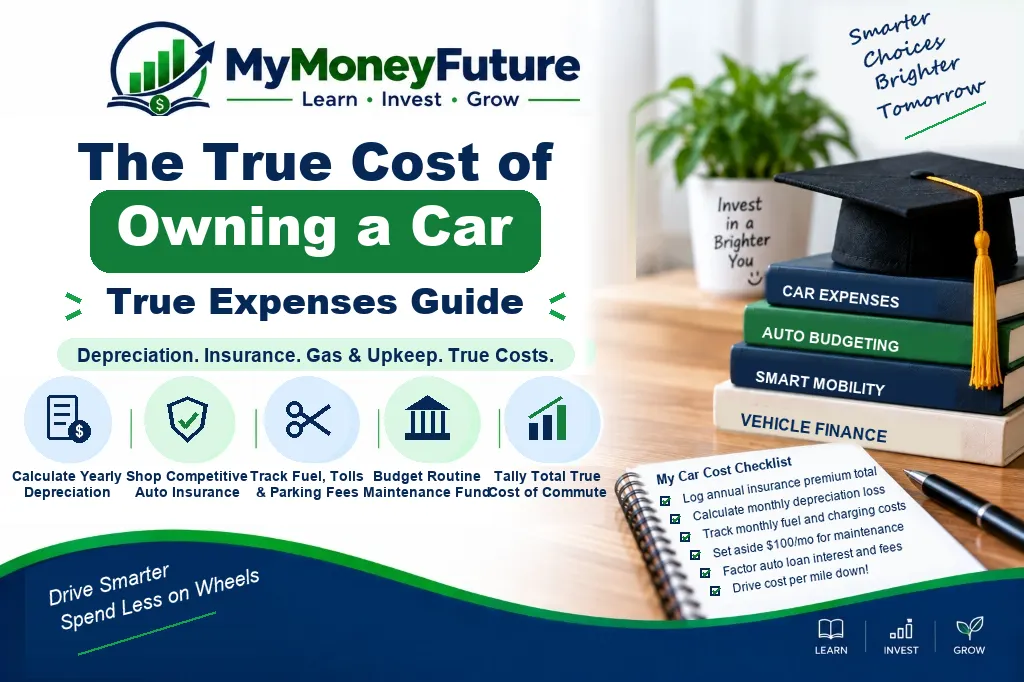
This guide breaks down The True Cost of Owning a Car in 2026, what expenses to expect, how to estimate your monthly cost, and where you can realistically save money without making unsafe choices.
Quick Answer
The true cost of owning a car includes far more than the loan payment. A realistic car budget should include depreciation, insurance, fuel or charging, maintenance, repairs, registration, taxes, parking, tolls, financing costs, and emergency repairs. The right car is one you can afford to buy, operate, maintain, and eventually replace.
Key Takeaways
| Key Point | What It Means |
| Monthly payment is not the full cost | A car also costs money to insure, fuel, repair, register, park, and maintain. |
| Depreciation is often the hidden cost | Cars usually lose value over time, even if you take good care of them. |
| Insurance can change the budget | Premiums depend on vehicle type, location, driving record, age, and coverage choices. |
| Fuel and maintenance matter | A cheaper car can become expensive if it uses more fuel or needs frequent repairs. |
| The best car is affordable long term | A realistic budget should include both predictable and surprise costs. |
What Counts as the True Cost of Owning a Car?
The true cost of owning a car is the total amount you spend to buy, finance, drive, insure, maintain, and eventually replace the vehicle.
Some costs are obvious. You see the loan payment every month. You notice when you fill the tank or pay the insurance bill. Other costs are quieter. Depreciation, tire wear, interest, taxes, and repairs may not feel like monthly expenses, but they are part of the real cost.
AAA’s latest Your Driving Costs analysis estimates the average cost to own and operate a new vehicle at $11,577 per year, or about $964.78 per month. That figure is not your exact cost, but the AAA vehicle ownership cost analysis is a useful reminder that car ownership is much larger than the sticker price.
Your personal cost may be lower or higher. A paid-off used sedan driven a few miles each week may cost much less. A financed SUV with high insurance and long daily commutes may cost much more.
The Main Costs of Car Ownership
1. Car Payment or Purchase Price
If you finance a car, the monthly payment is usually the first cost you notice. It depends on the purchase price, down payment, loan term, interest rate, taxes, and fees.
A lower monthly payment does not always mean a cheaper car. A long loan can make the payment look comfortable while increasing total interest and keeping you in debt longer.
| Loan Factor | Why It Matters |
| Purchase price | The higher the price, the more you must finance or pay upfront. |
| Down payment | A larger down payment can lower the loan balance. |
| Interest rate | A higher rate increases total cost. |
| Loan term | A longer term can lower the payment but increase total interest. |
| Taxes and fees | These can add thousands to the upfront cost. |
A good rule is to choose a car based on the total cost, not the monthly payment alone. Dealers and lenders can sometimes stretch a loan to make almost any car look affordable on paper.
2. Depreciation
Depreciation is the loss in value over time. If you buy a car for $35,000 and it is worth $24,000 a few years later, that $11,000 difference is part of your ownership cost.
Depreciation can be easy to ignore because no one sends you a monthly bill for it. But it affects your wealth. If you sell or trade the car later, depreciation determines how much money you get back.
New vehicles often lose value faster in the early years. Used cars may already have gone through the steepest part of depreciation, but they can carry higher repair risk.
The best choice depends on the vehicle, mileage, reliability, warranty, and how long you plan to keep it.
3. Insurance
Car insurance is one of the biggest ongoing costs. It can vary widely by driver and vehicle.
A new, expensive, high-performance, or frequently stolen car may cost more to insure. A clean driving record can help, while accidents, tickets, young drivers, and certain locations can raise premiums.
| Insurance Factor | Possible Effect |
| Vehicle value | More expensive cars can cost more to repair or replace. |
| Coverage level | Full coverage costs more than minimum coverage. |
| Deductible | A higher deductible may lower premiums but raises out-of-pocket risk. |
| Driving history | Accidents and tickets can increase premiums. |
| Location | Urban areas and high-claim regions may cost more. |
Before buying a car, get insurance quotes for that exact vehicle. Two cars with similar prices can have very different insurance costs.
4. Fuel or Charging
Fuel cost depends on miles driven, fuel price, and vehicle efficiency. Even a small difference in miles per gallon can matter over years.
The U.S. government’s FuelEconomy.gov comparison tools can help you compare fuel economy, estimated fuel costs, and efficiency differences between vehicles before you buy.
For electric vehicles, charging cost depends on local electricity rates, driving habits, home charging access, and public charging prices. Public fast charging can be more expensive than charging at home.
Do not assume an efficient vehicle always saves money overall. Compare purchase price, insurance, maintenance, tax credits, fuel savings, and resale value.
5. Maintenance
Maintenance includes routine care such as oil changes, filters, tire rotations, brake inspections, fluids, alignments, battery checks, and scheduled service.
Skipping maintenance can save money this month and cost much more later. A neglected car may burn more fuel, break down sooner, or lose resale value.
| Maintenance Item | Why It Matters |
| Oil and fluids | Protects engine and major systems. |
| Tires | Affects safety, fuel economy, and ride quality. |
| Brakes | Essential for safety and can be costly if ignored. |
| Battery | Failure can leave you stranded. |
| Scheduled service | Helps prevent larger repairs. |
6. Repairs
Repairs are different from maintenance. Maintenance is planned. Repairs happen when something breaks.
Older vehicles may have lower purchase prices but higher repair risk. Newer vehicles may have warranties, but repairs after the warranty expires can be expensive, especially on luxury or technology-heavy models.
A smart car budget includes a repair fund. Even reliable cars need tires, brakes, batteries, and unexpected fixes eventually.
7. Registration, Taxes, and Fees
Registration fees, inspection fees, title fees, road taxes, emissions tests, and local charges can add to the cost of ownership.
Some fees are annual. Others happen when you buy or renew. The amount can depend on your state, country, vehicle value, vehicle weight, fuel type, or emissions category.
These costs may not be huge every month, but ignoring them can create surprise bills.
8. Parking, Tolls, and Tickets
Parking can be a major cost in cities. Apartment parking, workplace parking, airport parking, meters, permits, and garages can quietly add up.
Tolls also matter for commuters. If you drive a toll route daily, the monthly cost can be larger than you expect.
Tickets should not be part of a planned budget, but parking violations, speeding tickets, and late toll charges can make ownership more expensive.
A Realistic Monthly Car Cost Example
Here is a simplified example for someone who finances a car and drives regularly.
| Expense | Estimated Monthly Cost |
| Loan payment | $450 |
| Insurance | $180 |
| Fuel or charging | $160 |
| Maintenance fund | $75 |
| Repair fund | $75 |
| Registration and fees | $35 |
| Parking and tolls | $80 |
| Car wash and small supplies | $20 |
| Estimated monthly total | $1,075 |
This example shows why a car with a $450 payment can easily become a $1,000 monthly transportation cost.
Your numbers may be lower. You may have no car payment, cheaper insurance, short commutes, or free parking. But the category list is still useful because it forces you to look beyond the loan payment.
How Much Car Can You Really Afford?
The affordable car is not the car a lender approves. It is the car that fits your budget after housing, food, savings, insurance, debt payments, and emergencies.
If the car payment forces you to stop saving or rely on credit cards, the vehicle is too expensive for your current situation.
A practical approach is to calculate your total transportation cost first. Include the payment, insurance, fuel, parking, maintenance, and repair savings. Then compare that number to your take-home income.
If transportation eats too much of your income, consider a cheaper vehicle, longer car ownership cycle, shorter commute, carpooling, public transit, or delaying the purchase.
New Car vs Used Car: Which Costs Less?
A new car may offer a warranty, modern safety features, better financing offers, and fewer immediate repairs. It may also depreciate faster and cost more to insure.
A used car may cost less upfront and lose value more slowly. It may also require more maintenance, have less warranty coverage, and need careful inspection before purchase.
| Choice | Potential Advantage | Potential Risk |
| New car | Warranty, latest features, predictable condition | Higher price and depreciation |
| Used car | Lower purchase price, slower depreciation | Repair risk and limited warranty |
| Certified used | Some warranty protection, inspected condition | Higher price than ordinary used |
| Older cash car | No monthly payment | Higher repair and reliability risk |
The best option depends on reliability, price, financing, insurance, inspection results, and how long you plan to keep the car.
How to Lower the True Cost of Car Ownership
Buy Less Car Than the Lender Allows
Lenders may approve a payment that is technically possible but uncomfortable. Leave room in your budget for maintenance, repairs, savings, and life changes.
Compare Insurance Before You Buy
Get quotes before signing. A vehicle that seems affordable can become expensive once insurance is included.
Avoid Long Loans When Possible
A long loan can lower the payment but increase total interest. It can also keep you owing more than the car is worth for longer.
Keep Up With Maintenance
Maintenance is cheaper than major failure. Follow the owner’s manual and keep records. Good records may also help resale value.
Drive Efficiently
Smooth acceleration, proper tire pressure, combined trips, and avoiding unnecessary idling can help reduce fuel use.
Keep Cars Longer
One of the biggest ways to save is to avoid replacing cars too frequently. If you can safely and reliably drive a paid-off car, your monthly budget may benefit.
Build a Car Replacement Fund
Once your car is paid off, keep making a smaller payment to yourself. This can help fund the next vehicle and reduce the need for a large loan.
Common Mistakes
- Shopping by monthly payment instead of total cost.
- Ignoring insurance quotes until after purchase.
- Assuming a used car is always cheaper without checking repair history.
- Buying a larger vehicle than needed.
- Skipping maintenance to save money short term.
- Not saving for repairs and tires.
- Rolling negative equity into a new loan.
- Forgetting parking, tolls, and registration fees.
The most expensive mistake is buying a car that leaves no room for the rest of your financial life. A car should support your life, not control your paycheck.
Expert Tips
Before buying, write down the full monthly cost on paper. Include a repair fund even if the car is new.
Check reliability ratings, insurance quotes, fuel economy, loan terms, and expected maintenance before you fall in love with a vehicle.
Avoid financing add-ons unless you understand the cost and value. Extras can increase the loan balance and interest.
If you already own a car, track every car expense for three months. You may find savings in insurance, driving habits, maintenance timing, or parking choices.
If a car purchase would delay emergency savings, debt payoff, or rent stability, consider waiting. Transportation matters, but so does financial breathing room.
FAQ Section
Q: What is the true cost of owning a car in 2026?
A: The true cost includes the payment or purchase price, insurance, fuel or charging, maintenance, repairs, depreciation, taxes, registration, parking, tolls, and financing costs.
Q: Is the monthly payment the biggest car cost?
A: It can be, but depreciation, insurance, and fuel may also be major costs. A car with a low payment can still be expensive to own.
Q: How much should I budget for car maintenance?
A: The right amount depends on the car, age, mileage, and driving habits. Many drivers set aside a monthly amount for routine maintenance and a separate amount for repairs.
Q: Is buying used always cheaper?
A: Not always. Used cars often cost less upfront, but repairs, interest rates, and reliability can change the math.
Q: How can I reduce car insurance costs?
A: Compare quotes, keep a clean driving record, review coverage, ask about discounts, and choose a vehicle that is not unusually expensive to insure.
Q: Should I buy or lease a car?
A: Buying may be better if you keep cars for a long time. Leasing may offer lower payments and newer vehicles, but mileage limits, fees, and no ownership can make it costly.
Q: How do I know if a car is too expensive?
A: It is likely too expensive if the total transportation cost prevents you from saving, paying debt, covering essentials, or handling repairs.
Q: What is the biggest hidden cost of car ownership?
A: Depreciation is often the biggest hidden cost because the car loses value even though you do not pay a monthly bill for that loss.
Conclusion
The true cost of owning a car in 2026 is not just the payment. It is the full cost of buying, financing, driving, maintaining, insuring, parking, repairing, and eventually replacing the vehicle.
A smart car decision starts before you visit the dealer. Estimate the total monthly cost, compare insurance, check fuel economy, plan for repairs, and choose a vehicle that fits your real life.
The goal is not to avoid cars completely. The goal is to own transportation without letting it quietly drain your financial future.
Educational Disclaimer
This article is for educational and informational purposes only. It is not financial, legal, tax, insurance, or automotive advice. Vehicle costs vary by location, lender, insurer, driving habits, fuel prices, repair needs, and market conditions. Review your own numbers and consult qualified professionals before making major financial decisions.
Calculate Your Long-Term Wealth Growth
See how compounding interest accelerates your net worth and calculate your exact FIRE retirement freedom number: